

In 1996, the last Magdalene Laundry closed in Ireland. Less than two decades later, the same country became the first in the world to legalize same sex marriage through a nationwide referendum. The contrast between these two moments remains one of the most striking examples of social change in contemporary Europe.
The result of the 2015 referendum still appears to many observers as a profound cultural transformation, not merely a legal reform. When I was living in Ireland at the time, friends from Poland would ask me: “How did such a Catholic country as Ireland come to vote by a majority for the equality of all its citizens?”
Not so long ago, Ireland was widely seen as one of the most socially conservative countries in Western Europe. For decades the Catholic Church held a dominant position in public life, shaping the education system, healthcare, and social norms. Homosexuality remained a crime until 1993, and divorce was banned by the constitution until 1996. So how are we to understand the path from the Magdalene Laundries to marriage equality? For me, the answer began not in an archive, but on the street.
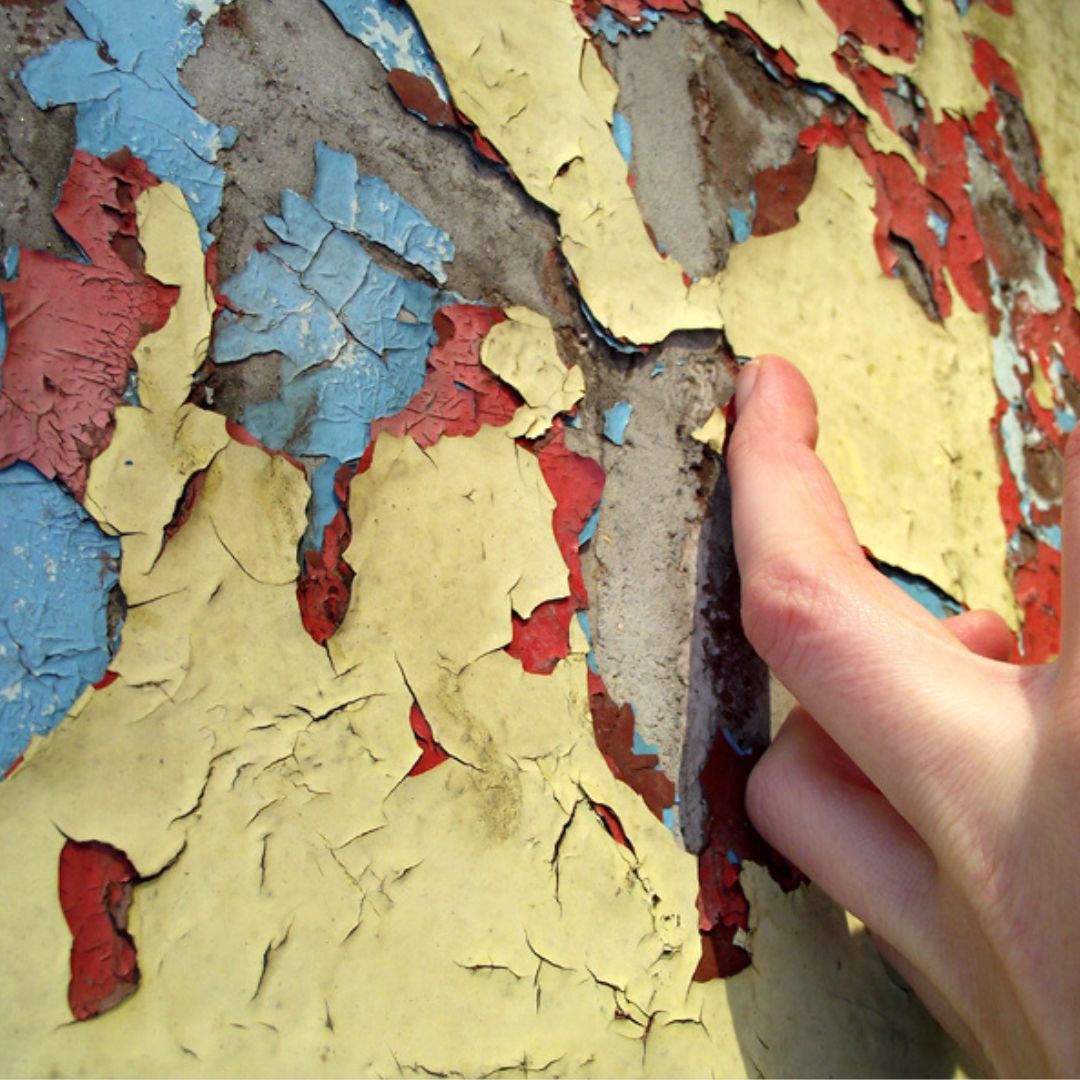
In 2013, as an emigrant from Poland, I walked the streets of Dublin with a small scraper in hand, searching for traces of “Ulysses”. I collected fragments of peeling paint and plaster from old facades, surfaces shaped by time, weather, and history. In the studio, I transformed these fragments into urban mosaics.
It was an attempt to confront a place with time, but also a reflection on the condition of the emigrant, a person negotiating their own identity within an unfamiliar cultural landscape. Dublin’s facades concealed layers of history, and every fragment I found provoked another story, often leading back to a time when the Catholic Church exerted significant influence over Irish public life.
The Magdalene Laundries
One day I came across traces of the Irish Magdalene Laundries. These institutions operated in Ireland from the 18th century until the end of the 20th century. Today, based on state investigations and survivor testimonies, they are widely recognized as places where many women and girls were sent under coercion, often by decisions of their families or institutions, where they performed unpaid labor under conditions of extreme restriction of freedom.
The experiences of women held in these institutions have been documented in survivor accounts and state reports, including the McAleese Report (2013), which examined the state’s involvement in the operation of the Magdalene Laundries.
In many cases, unmarried mothers and women who did not conform to prevailing social norms were especially at risk. Social stigma played a significant role in families’ decisions, and placing women in such institutions was often presented as a form of “protection” or “rehabilitation,” even though for many of them it meant a profound loss of autonomy.
One of the people who later spoke publicly about experiences within this system was Sinéad O’Connor. As a teenager she was sent to An Grianán Training Centre in Drumcondra, a reform institution run by the Sisters of Our Lady of Charity that stood on the grounds of, and grew directly out of, the adjoining St. Mary’s High Park Magdalene Laundry. Over time she became one of the most outspoken critics of the Catholic Church, notably tearing up a photograph of Pope John Paul II live on television in 1992.
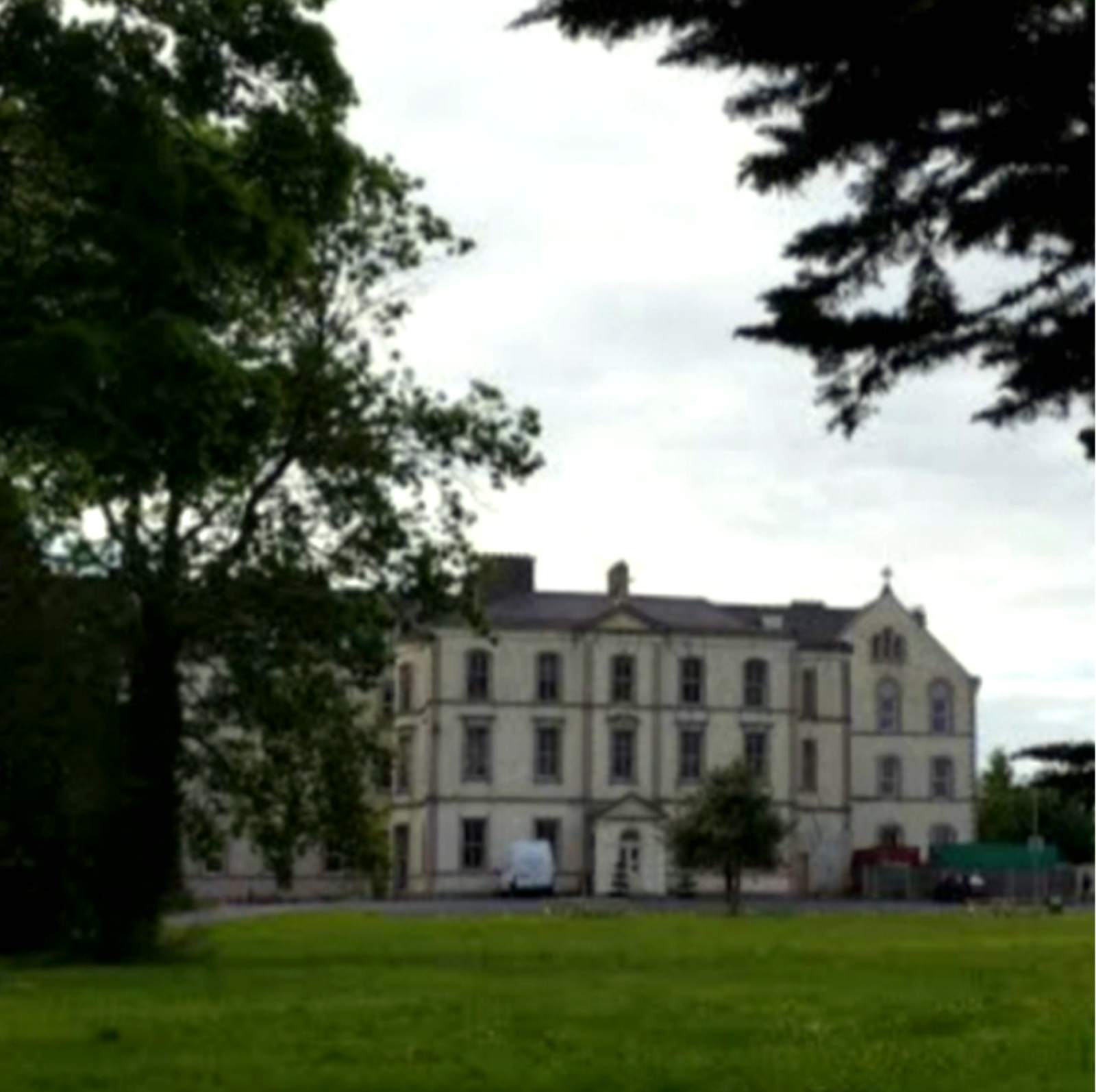
During my search for these places, I discovered that the building I was looking for no longer existed in its original form. The laundry itself had been demolished, and an apartment block now stands in its place, while the adjoining convent building survived, later repurposed as a hostel for homeless men, with part of it left standing empty and derelict. Standing there, I realized that the physical disappearance of a place does not mean the disappearance of historical memory. I scraped away scraps of old plaster and paint from that site, as samples of layers of time, experience, and memory, carrying these fragments back to my studio and building from them the work Cleaning Souls Over 7 Decades.
Mannix Flynn
On another occasion, walking along the River Liffey, I saw, lit by the sun, a peeling facade of a building in greenish tones. At the foot of this facade lay scraps of wallpaper that had once covered the outer wall, worked on for long years by wind, sun, and rain. I picked them up, having no idea that these flakes of paint and old wallpaper would turn out to be fragments of the studio of Mannix Flynn, an Irish playwright, artist, and politician, as I learned later.
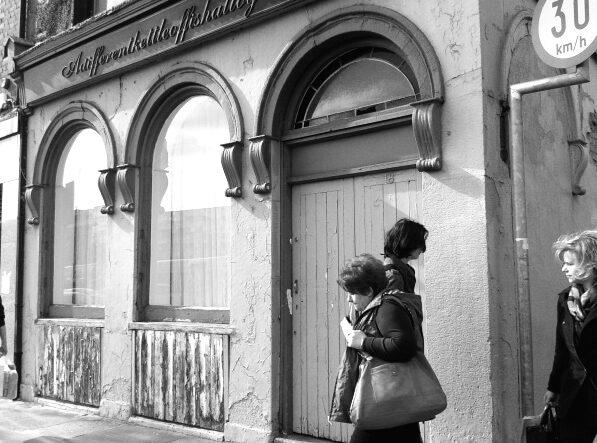
These fragile remains became the foundation of my work “I’m the Memory of Mannix F.”, in which I recreated the abandoned layers, handling them as if I were carrying butterfly wings. Through this I explored how memory is inscribed into the material fabric of a city. What at first seemed like ordinary urban debris turned out to be a surface carrying both individual and collective stories, preserved beneath successive layers of paint, wallpaper, and time.
The man behind that studio was not a passive subject of history, but one of its most persistent chroniclers. Flynn spoke publicly on many occasions about his own experiences with institutional care. As a child, he was placed in St Joseph’s Industrial School in Letterfrack, part of a vast network of institutions run by the state and the Church, whose activities were later examined in detail by state commissions.
The Ryan Report (2009) documented systemic failures in the oversight of such institutions, including cases of violence and neglect. Since then it has stood as one of the most important points of reference for understanding the history of Ireland’s institutional care system.
Encountering these traces within the urban space reaffirmed my conviction that Dublin conceals scattered layers of institutional memory, often invisible yet still present within the fabric of the city.
A System of Neglect
Since the late 1990s, Ireland has undergone an intensive process of publicly reckoning with the history of abuse in care institutions. Investigative journalism, survivor testimonies, and state inquiries contributed to a wide ranging reassessment of the history of industrial schools, reformatories, and related institutions.
Publications such as “Suffer the Little Children” by Mary Raftery and Eoin O’Sullivan, along with the documentary series “States of Fear” (1999), played a key role in bringing these issues to public attention. Subsequent investigations, culminating in the Ryan Report (2009), revealed recurring cases of neglect and abuse in some of these institutions over many years.
The findings of these inquiries point to the failure of an entire system, not because every institution or every individual acted in the same way, but because effective oversight and accountability were lacking.
Research by historian Catherine Corless made it possible to identify the death certificates of 796 children who died at the Bon Secours institution in Tuam, County Galway (the Tuam Mother and Baby Home). Her work drew attention to the absence of official burial records for many of them and led to further investigations being launched.
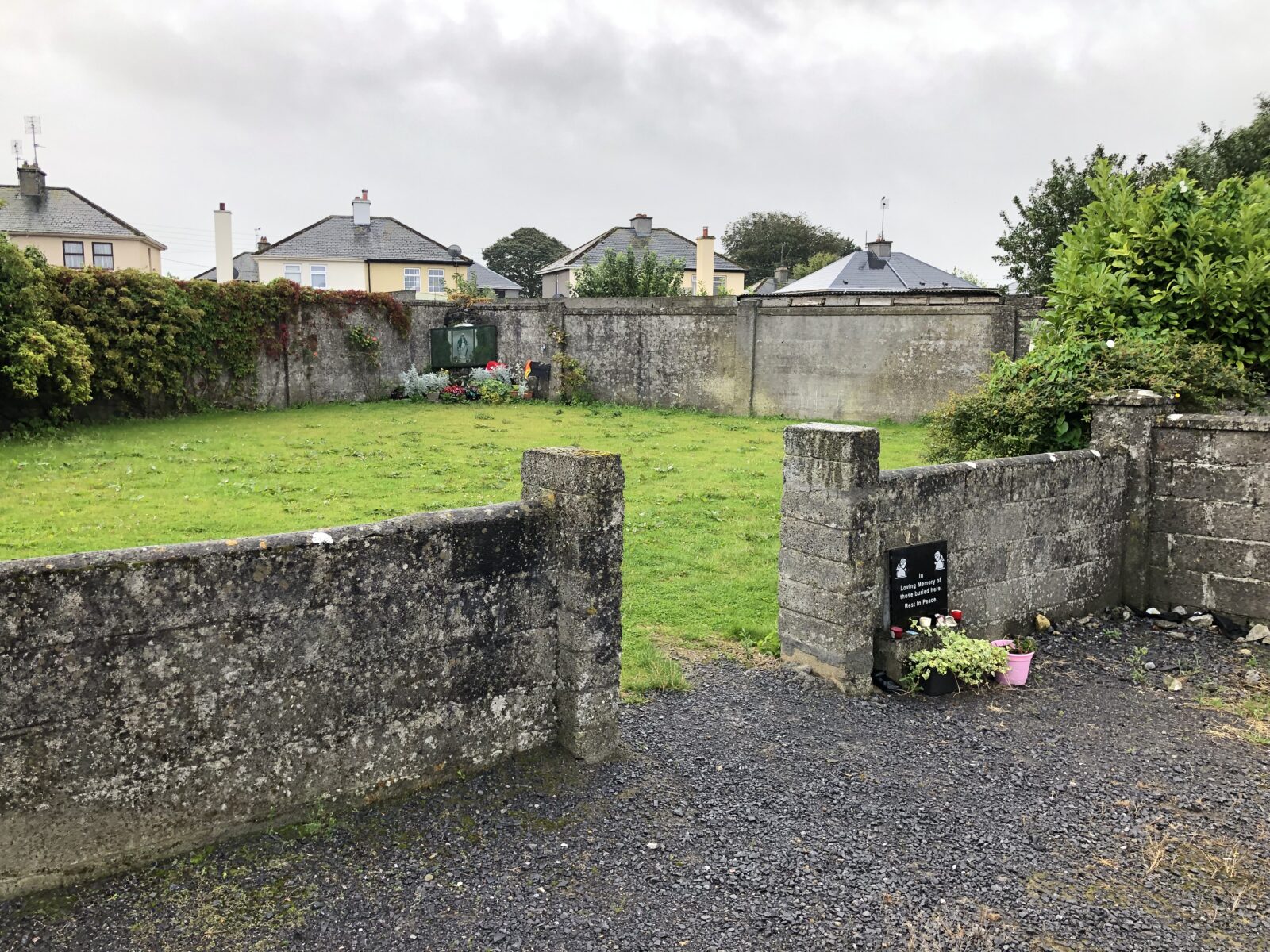
Later inquiries confirmed the presence of human remains in underground structures on the grounds of the former mother and baby home run by the Bon Secours order, specifically in a disused septic tank and adjoining chambers. These discoveries led to the reopening of state investigations into the site.
In 2025, a formal exhumation program began, led by an international team of forensic experts. Its aim is to recover the remains, identify the victims where possible, and ensure they receive a dignified burial in accordance with contemporary ethical and legal standards.
Reckonings of this kind are rarely confined to a single country. As someone who moved between two Catholic societies with strikingly different trajectories, I could not help but view Ireland’s history through the lens of my own.
Ireland and Poland
Looking at the cultural history of Ireland and Poland, one can find certain similarities in the relationship between religion, national identity, and the state.
In both countries, the Catholic Church played an important historical role in sustaining national identity during periods of political subjugation, in Ireland during the struggle for independence, and in Poland during the partitions and later under communism.
This historical role contributed to the Church’s strong social legitimacy after independence was regained, extending its influence over education, healthcare, and moral authority in public life.
However, the long term relationship between the Church and society developed differently in each country. In Ireland, particularly from the late 20th century onward, a series of revelations, legal reforms, and referendums significantly diminished the institutional authority of the Church. In Poland, this process has unfolded differently and remains far more contested.
These changes reflect broader processes of secularization and generational change, rather than a single moment of sudden rupture.
While many clergy and lay people acted in good faith and made a positive contribution to social life, a historical analysis of these institutions must also take into account documented cases of abuse and systemic failures of accountability.
Conclusion: From the Magdalene Laundries to Marriage Equality
The 2015 referendum on same sex marriage is today widely regarded as a landmark moment in Ireland’s constitutional and social history. It reflects a significant shift in social attitudes toward equality and the role of religious authority in civic life.
It was not a sudden breakthrough, but the culmination of long term processes, secularization, generational change, and the gradual rebuilding of trust in institutions.
As I walked the city, searching for traces of forgotten histories, I did not expect that the fragments I found would tell a far larger story about Ireland’s transformation.
Looking at this journey as a whole, Ireland’s path from the Magdalene Laundries to marriage equality can be seen not as a closed chapter, but as an ongoing process of reexamining institutions, memory, and society itself.